The station’s windows are now coated in a blast-proof protectivelayering to resist an explosion and reduce visibility from theoutside.The improvements were funded through an emergency declarationthe city passed last year to issue no-bid contracts. The cityreceived $150,000 grant for improvements and $15,000 in countyfunds from Supervisor Jeff Stone. The City Council approved $55,000in security improvements.The improvements bring the station up to date from when thestation was first built in January 1960, Wisehart said.“Back then they didn’t need this type of protection.
It was wideopen,” Wisehart said. “We’re doing everything to bring this up tospeed as a modern police station that were never made a priorityuntil now.”Reach John Asbury at 951-763-3451 or jasbury@PE.com. Join the ConversationWe invite you to use our commenting platform to engage in insightful conversations about issues in our community. Although we do not pre-screen comments, we reserve the right at all times to remove any information or materials that are unlawful, threatening, abusive, libelous, defamatory, obscene, vulgar, pornographic, profane, indecent or otherwise objectionable to us, and to disclose any information necessary to satisfy the law, regulation, or government request.
We might permanently block any user who abuses these conditions.If you see comments that you find offensive, please use the “Flag as Inappropriate” feature by hovering over the right side of the post, and pulling down on the arrow that appears. Or, contact our editors by emailing moderator@scng.com.
Related jobs,A security guard (also known as a security inspector or protective agent) is a person employed by a public or private party to protect the employing party’s assets (, people, equipment, money, etc.) from a variety of hazards (such as waste, damaged property, unsafe worker behavior, criminal activity such as theft, etc.) by enforcing preventative measures. Security guards do this by maintaining a high-visibility presence to deter illegal and inappropriate actions, looking (either directly, through patrols, or indirectly, by monitoring or ) for signs of crime or other hazards (such as a fire), taking action to minimize damage (such as warning and escorting trespassers off property), and reporting any incidents to their clients and (such as the police or paramedics), as appropriate.Security officers are generally to represent their lawful to protect private property. Security guards are generally governed by legal regulations, which set out the requirements for eligibility (e.g., a criminal record check) and the permitted authorities of a security guard in a given jurisdiction. The authorities permitted to security guards vary by country and subnational jurisdiction. Security officers are hired by a range of organizations, including businesses, government departments and agencies and not-for-profit organizations (e.g., churches and charitable organizations).Until the 1980s, the term was more commonly applied to this function, a usage dating back to at least the in where there was no form of law enforcement (other than it being a private matter). This term was carried over to North America where it was interchangeable with night-watchman e.g. Security guard until both terms were replaced with the modern security-based titles.
Are sometimes regarded as fulfilling a function. Private guard escort on a merchant ship providing security services against pirates.Many security firms and proprietary security departments practice the 'detect, deter, observe and report' methodology. Security officers are not required to make arrests, but have the authority to make a, or otherwise act as an agent of law enforcement, for example, at the request of a or.A private security officer's responsibility is protecting their client from a variety of hazards (usually in the form of criminal acts). Security personnel enforce company rules and can act to protect lives and property, and they sometimes have a contractual obligation to provide these actions. In addition to basic deterrence, security officers are often trained to perform specialized tasks such as arrest and control (including handcuffing and restraints), operate emergency equipment, perform, take accurate notes, write detailed reports, and perform other tasks as required by the client they are serving.
All security officers are also required to go through additional training mandated by the state for the carrying of weapons such as batons, firearms, and pepper spray (e.g. The Bureau of Security and Investigative Services in California has requirements that a license for each item listed must be carried while on duty). Some officers are required to complete police certification for special duties.The number of jobs is expected to grow in the U.S., with 175,000 new security jobs expected before 2016. In recent years, due to elevated threats of terrorism, most security officers are required to have bomb-threat training and/or emergency crisis training, especially those located in areas such as shopping malls, schools, and any other area where the general public congregate. One major economic justification for security personnel is that companies (particularly fire insurance carriers) will give substantial rate discounts to sites which have a 24-hour presence. For a high risk or high value property, the discount can often exceed the money being spent on its security program. Discounts are offered because having security on site increases the odds that any fire will be noticed and reported to the local fire department before a total loss occurs.
Also, the presence of security officers (particularly in combination with effective security procedures) tends to diminish ', theft, employee misconduct and safety rule violations, property damage, or even. Many hire security officers to protect money when transferring it from the casino to the casino's bank.Security personnel may also perform at building entrances and vehicle gates; meaning, they ensure that employees and visitors display proper passes or identification before entering the facility. Security officers are called upon to respond to potential hazards (such as broken lights or doors, disturbances, lost persons, minor injuries, etc.) and to assist in serious emergencies (medicals, fires, crime, etc.) by securing the scene to prevent further loss or damage, summoning emergency responders to the incident, helping to redirect foot traffic to safe locations, and by documenting what happened on an incident report to give their client an idea of how to prevent similar situations from occurring. Armed security officers are frequently contracted to respond as law enforcement until a given situation at a client location is under control and/or public authorities arrive on the scene.Patrolling is usually a large part of a security officer's duties, as most incidents are prevented by being looked for instead of waiting for them to occur. Often these patrols are logged by use of a, which require regular patrols. Until recently the most commonly used form used to be systems that required a key for manual punching of a number to a strip of paper inside with the time pre-printed on it. But recently, electronic systems have risen in popularity due to their light weight, ease of use, and downloadable logging capabilities.
Regular patrols are, however, becoming less accepted as an industry standard, as it provides predictability for the would-be criminal, as well as monotony for the security officer on duty. Random patrols are easily programmed into electronic systems, allowing greater freedom of movement and unpredictability. Are beginning to be used because they are a more effective means of tracking officers' movements and behavior.Personnel Although security officers differ from police officers, military personnel, federal agents/officers, and the like, Australia and the United States have a growing proportion of security personnel that have former police or military experience, including senior management personnel.
On the other hand, some security officers, young people in particular, use the job as practical experience to use in applying to law enforcement agencies.Types of personnel and companies. A security officer protecting the entrance to an apartment building, and managing the parking of cars in, Province,.Security personnel are classified as one of the following:. 'In-house' or 'proprietary' (i.e. Van with a crew of security guards in, ChinaState and local governments sometimes regulate the use of these terms by law—for example, certain words and phrases that 'give an impression that he or she is connected in any way with the federal government, a state government, or any political subdivision of a state government' are forbidden for use by California security licensees by Business and Professions Code Section 7582.26.
So the terms 'private police' or 'special agent' would be unlawful for a security licensee to use in California. Similarly, in, various acts specifically prohibits private security personnel from using the terms Probation Officer, law enforcement, police, or police officer.Alberta and Ontario prohibit the use of the term Security Officer, which has been in widespread use in the United States for many decades. Recent changes to the act have also introduced restrictions on uniform and vehicle colours and markings to make private security personnel clearly distinctive from police personnel. Some sources feel that some of these restrictions are put in place to satisfy the. Specialized VIP security guard services and companies are in high demand and are defined by their ability to protect celebrities and executives during times of unrest.
There is a marked difference between persons performing the duties historically associated with watchmen and persons who take a more active role in protecting persons and property. The former, often called 'guards', are taught the mantra 'observe and report', are minimally trained, and not expected to deal with the public or confront criminals.The latter are often highly trained, sometimes armed depending on contracts agreed upon with clientele, and are more likely to interact with the general public and to confront the criminal element. These employees tend to take pride in the title 'Security Officer' or ' and disdain the label of 'guard'. Security jobs vary in pay and duties.
There is sometimes little relationship between duties performed and compensation, for example some mall 'security officers' who are exposed to serious risks earn less per hour than 'industrial security guards' who have less training and responsibility. However, there are now more positions in the security role that separate not just the titles, but the job itself. The roles have progressed and so have the areas for which security people are needed.
The term 'agent' can be confusing in the security industry because it can describe a civil legal relationship between an employee and their employer or contractor ('agent of the owner' in California PC 602), and also can describe a person in government service (' Jones of the '.) The title 'agent' can be confused with bail enforcement agents, also known as 'bounty hunters', who are sometimes regulated by the same agencies which regulate private security. The term 'agent' is also used in other industries, such as banking agents, loan agents and real estate agents. Security agents are often employed in loss prevention and personal or executive protection (bodyguards) roles. They typically work in plainclothes (without a uniform), and are usually highly trained to act lawfully in direct defense of life or property.Security officers are private citizens, and therefore are bound by the same laws and regulations as the citizenry they are contracted to serve, and therefore are not allowed to represent themselves as law enforcement under penalty of law. Training. A private security guard.Just as with the police profession, training requirements for the private security industry have evolved over time. For many years security officers were poorly chosen and poorly trained (if at all), partly because security companies who contracted with clients in private industry were paid very little for their security services.
For the most part, contracts were awarded to security officer companies through a competition process and the final selection was often made based on cost rather than the experience or professionalism of the security guard company. That changed drastically on September 11, 2001 when radical terrorists attacked the United States. The event moved corporate threat concerns to the top of the priority list for most security guard contracts started being awarded based on professionalism.
More money was invested in security so more money became available for training of security guards. The term 'security professional' began to surface and large private security companies like Blackwater, USA began offering training services for the private security industry that approached the level of training provided by the military. Security companies began paying enough to attract people with significant backgrounds in law enforcement and the military, often in special operations. Australia. This section needs expansion.
You can help. ( August 2009)Any person who conducts a business or is employed in a security-related field within Australia is required to be licensed. Each of the six states and two territories of Australia have separate legislation that covers all security activities.
Security vehicle and officer in,.In, private security falls under the jurisdiction of Canada's ten provinces and three territories. All ten of Canada's provinces and one of its territories (the Yukon) have legislation that regulates the contract security industry. These eleven jurisdictions require that companies that provide security guard services and their employees be licensed. Most provinces in Canada regulate the use of handcuffs and weapons (such as firearms and batons) by contract security companies and their employees, either banning such use completely or permitting it only under certain circumstances. Additionally, in some provinces, some terms, or variations of them, are prohibited either on a uniform or in self-reference.Canada's federal laws also restrict the ability of security officers to be armed.
For example, section 17 of the Firearms Act makes it an offense for any person, including a security officer, to possess prohibited or restricted firearms (i.e. Handguns) anywhere outside of his or her home.
There are two exceptions to this prohibition found in sections 18 and 19 of the Act. Section 18 deals with transportation of firearms while Section 19 deals with allowing persons to carry such firearms on their persons to protect their lives or the lives of other persons, or for the performance of their occupation (Armour Car Guards, Licensed Trappers), provided an Authorization to Carry (ATC) is first obtained.
British Columbia Private security in the province of British Columbia is governed by two pieces of legislation: the Security Services Act and the Security Services Regulation. These laws are administered and enforced by the Security Programs and Police Technology Division of the Ministry of Public Safety and Solicitor General. The legislation requires that guards must be at least 19 years old, undergo a criminal background check, and successfully complete a training course. As far as weapons, British Columbia law severely restricts their use by security officers. Section 11(1)(c) of the Security Services Regulation prohibits security personnel from carrying or using any 'item designed for debilitating or controlling a person or animal', which the government interprets to include all weapons.
As well, section 11 forbids private security from using or carrying restraints, such as handcuffs, unless authorized by the government. However, as in other parts of Canada, armoured car officers are permitted to carry firearms. In the past, only personnel that worked for contract security, that is, security companies, were regulated in British Columbia. However, as of September 1, 2009, in-house security officers and private investigators came under the jurisdiction of the Security Services Act and Security Services Regulation. Bodyguards and bouncers, effective November 1, 2009, are also subject to these regulations.
Watchman on duty at a residential block in Hong Kong.In Hong Kong, the term Security Officer refers to a senior staff member who supervises a team of security personnel. The staff who work under security officers' supervision are calledSecurity Guards.Legislation Before 1 October 1996, private security personnel were regulated by the Watchmen Ordinance (Chapter 299). However, there were many problems with that system of regulation—for example, there were no restrictions as to whom may establish private security service companies to provide security services to a client. Also, there was no regulation of people whom may perform installation of security systems. Some employers hired 'caretakers' instead of security guards to avoid their responsibilities under the ordinance (in formal definition, 'caretakers' are supposed to provide facilities management service, although security service, which provided to residential properties, takes some parts of facilities management service). A group of Hong Kong security guards in formation before going on dutyAny applicant who wishes to apply for a Security Personnel Permit (SPP) must:.
He/she have been living in Hong Kong for at least 5 years. (This requirement may have been changed).
No criminal record. At least 17 years old when submitting his/her application. Have passed a mandatory 16-hour training course and have been granted a certificate of the course. If the applicant is over 65 years old, he/she must submit his/her health examination report.Permit Security Personnel Permit was separated to four types: A, B, C, and D.
Type A permit holder was permitted to work in a 'single-block' residential building; they are not allowed to carry firearms. No age limit. Type B permit holder was permitted to work in any type of properties, but they also are not allowed carry firearms. The maximum age limit of this permit is 65.
Type C permit holder was permitted to work as an armed guard. (Usually, they are members of the cash transport car crew.) The maximum age limit of this permit is 55. Type D permit holder was permitted to design, install, and repair security devices. No maximum age limit.The permit is valid for five years. All holders must renew their permit before it expires, or they will lose their qualification to work, as such, until their permit is renewed.The type A and Type B security service are gradually combined with service, though the boundary between these two industries is unclear.Power of arrest Security Guards in do not have special powers of arrest above that of the ordinary citizen, i.e., also known locally as the '101 arrest power'. The Section 101 in the Criminal Procedure Ordinance addresses that arrest of an offender by a private citizen is allowed in certain circumstances if the offender is attempting an arrestable offense. Once arrested, the suspect must be delivered to a police office as soon as possible.
An arrestable offence is defined as any crime carrying a sentence of more than 12 months imprisonment. No security personnel are allowed to search other person, nor are they allowed to get personal information from other people, with the exception of some specific circumstances.Israel In, almost all security guards carry a firearm, primarily to prevent. Security guards are common: they perform entrance checks at shopping malls, transportation terminals, government and other office buildings, and many stores.
Many locations with a high number of visitors, such as the, employ X-ray machines to check passenger's bags; in other places, they are opened and visually inspected. Since 2009, private security guards companies as have also replaced official security forces at some checkpoints inside and on the border of the, as well as the crossings to.Malaysia The private security industry is regulated by the Ministry of Home Affairs (Kementerian Dalam Negeri). As of 2018, all private security companies in Malaysia must have a minimum of 80% of their employees complete a Certified Security Guard Training Course in order to receive approval to renew their Private Agency License. Allows for the use of security guards whereby immigration policy does not allow the use of foreign workers to be employed in the security industry.
Main article:Security guards along with the rest of the private security industry are regulated under Act 56 of 2001, Private Security Industry Regulation Act. United States Private security guards have outnumbered police officers since the 1980s, predating the heightened concern about security brought on by the September 11, 2001, attacks. The more than 1 million contract security officers, and an equal number of guards estimated to work directly for U.S. Corporations, is much greater than the nearly 700,000 sworn law enforcement officers in the United States. Most states require a to work as a security officer.
This license may include a criminal or mandated training requirements. Security guards have the same powers of arrest as a private citizen, called a 'private person' arrest, 'any person' arrest, or '. If weapons are carried, additional permits and training are usually required. Armed security personnel are generally employed to protect sensitive sites such as government and military installations, armored money transports, casinos, banks and other financial institutions, and nuclear power plants. However, armed security is quickly becoming a standard for vehicle patrol officers and on many other non-government sites.In some states, companies are developing technology to enhance private security. Using behavior analysis, computers can detect threats more quickly with fewer errors in judgement. Using specific algorithms, a computer can now detect aggressive and defensive body language, which triggers an alert to security or proper authorities depending on the event.
These systems can also track slips and falls, theft and other events commonly experienced in corporate America. The responsibilities of security guards in the United States are expanding in scope. For example, a trend is the increasing use of private security to support services previously provided by police departments. Addresses substantive legal and public policy issues which directly or indirectly relate to the provision of security services. These can be demonstrated by the logic of alternative or supplemental service providers. The use of has particular appeal because property or business owners can directly contract for services, thereby providing welcome relief for municipal budgets. Finally, private police functions can be flexible, depending upon the financial, organizational, political, and circumstances of the client.Arizona — Licensed security companies are required to provide eight hours of pre-assignment training to all persons employed as security guards before the employee acts in the capacity of a security guard.
There is a state-mandated curriculum that must be taught, and subjects covered must include criminal law and laws of arrest, uniforms and grooming, communications, use of force, general security procedures, crime scene preservation, ethics, and first response. An ADT Bel-Air Patrol vehicleCalifornia — Security Guards are required to obtain a license from the Bureau of Security and Investigative Services (BSIS), of the. Applicants must be at least 18 years old, undergo a criminal history background check through the (DOJ) and the Federal Bureau of Investigation (FBI), and complete a 40-hour course of required training.
This required training is broken down into smaller training sections and time-lines. The first is 8 hours of BSIS-designed instruction on and weapons. Then, within 30 days of getting the individual officers license, they must receive 16 hours of training on various mandatory and elective courses. Finally, within 6 months of getting their license, they must receive an additional 16 hours of training on various mandatory and elective courses. California security officers are also required to complete 8 hours of annual training on security-related topics, in addition to the initial 40 hours of training. The training and exam may be administered by any private patrol operator or by any of a large number of certified training facilities.
This training can be in the classroom or online.New Jersey — As of 2006 all security personnel employed by a 'security officer company' which provides security services to other entities by contract must undergo a state mandated certified training program. This law, commonly referred to as SORA, is the state's effort to increase the quality of security personnel. Security personnel employed by other types of businesses do not require the SORA certification card. However, those employed by the Atlantic City casinos are required to have the state issued 'Casino Employee Registration' card.New Mexico — As of 2008 all security guards must undergo FBI background checks and a certified training program. Guards who carry firearms must also undergo additional training with a firearm through an approved firearms instructor and pass a psychological exam. The security industry is regulated through the New Mexico Regulation and Licensing Division.North Carolina — Security Officers in North Carolina are required to register and become certified with the Private Protective Services Board (PPSB), the private security authority body under the. The purpose of the Private Protective Services Board is to administer the licensing, education and training requirements for persons, firms, associations and corporations engaged in private protective services within North Carolina.
The board is totally fee funded and is staffed by departmental employees directed on a daily basis by the Director, who is appointed by the Attorney General. There are two classifications for an officer: armed and unarmed. While an unarmed officer is required to take a 16-hour class of training and instruction to become certified, an armed officer must take additional hours of classroom training as well as qualify on a gun range with the firearm which will be carried on duty.Oklahoma — Security officers in Oklahoma are licensed by CLEET. To be licensed as an unarmed officer an individual must be at least 18 years of age and undergo 40 hours of classroom training and pass criminal history checks.
Armed guards must be 21 years of age, have another 40 hours of classroom training, qualify with their firearm and pass a psychological evaluation.Oregon — Department of Public Safety, Standards and TrainingPennsylvania — No licensing requirements to be an unarmed security guard. However, anyone who carried a firearm or other 'lethal weapon' in the course and scope of their employment must be trained as a 'Certified Agent' and successfully complete a 40-hour training course (including shooting range time) in order to be certified to carry weapons while on duty under the Lethal Weapons Training Act (commonly referred to as Act 235 certification). Certification involves completing a medical physical exam, a psychological examination, classroom training and qualifying on a pistol range, with firing of 50 rounds of ammo larger than a.380acp. Agents are also required to qualify on a shotgun. The certification is good for five years at which time an eight-hour refresher course must be taken or the certification is revoked.South Carolina — All Security Officers have the same authority and power of arrest as Sheriff's Deputies, while on the property they are paid to protect, and according to Attorney General Alan Wilson, are considered Law Enforcement for the purpose of making arrests and swearing out a warrant before the magistrate. Private Officers may respond to calls for service, make arrests and use blue lights and traffic radar. They may also be specially authorized by the (SLED) to issue Uniform Traffic Tickets to violators.
Security Officers are licensed or registered (as appropriate) by SLED for one year at a time. Training for unarmed officers is 8 hours, an additional 8 hours is required for a security weapons permit or a concealed security weapons permit. Additional hours are required to be documented for officers issuing public or private tickets as well as officers who will be using batons, pepper spray or tasers. A museum guard in 1935.Virginia — Since the 1980s, Security Officers in Virginia are required to be certified by DCJS (Department of Criminal Justice Services, the same agency that certifies law enforcement officers). To be certified as an unarmed security officer one must go through 18 hours of classroom training from a certified instructor in order to obtain this card and it must be done by the end of their 90 days after hire with a Security company.
Every two years the card must be renewed, by completing an in-service with a certified instructor. To be certified as an armed security officer one must complete an additional 24 hours of firearms training, 8 hours of training in conducting a lawful arrest, and qualification with the type and caliber of weapon they intend to carry. Firearms endorsements must be renewed annually by completing an in-service and passing a firearms qualification. Certified armed security officers are authorized under state code to arrest for any offense committed in their presence while they are on duty at the location they are hired to protect. Unarmed officers have no arrest powers. They also are granted the authority by the state law to issue summons to appear in court for felonies and misdemeanors. Virginia also allows security officers to attend additional 40 hours of training to become certified as Conservators of the Peace (Special Police) for the company employing them.
This appointment is performed by a Circuit Court Judge, wherein the officer is actually sworn in and has the powers of a police officer on property they are working, as well as the lawful duty to act upon witnessing any felony and the ability to pursue fleeing felons. Such sworn officers are also permitted the use of sirens and red lights.
Those who handle K-9s, work as dispatchers, alarm responders, private investigators, instructors, bounty hunters, armored car couriers and Executive Protection Specialists are other categories of training regulated by DCJS with additional training requirements. All positions require and FBI background checks.St. Louis, Missouri — Security officers are required to be licensed by the. Security officer training is a two-day class and yearly renewal class.
Armed officers must shoot bi-annually to keep their armed status. County license is called a Metropolitan License, meaning it is good for St. Louis City and County. Louis City web site has all the information regarding licensing requirements, as they are the same in the city and county.Texas — There are three types of Security Officer license types in the state of Texas. Each requires a certain level of training. All training and licensing is regulated by the Department of Public Safety's Private Security Bureau. The three types of licenses areNon Commissioned Security Officer (Level II) A Non Commissioned Security Officer is unarmed and must wear a distinctive DPS approved uniform.
The main purpose of this type of officer is the phrase most associated with security, Observe and Report. The Security Officer is generally there to be a good witness. Required Training: Level II/Non Commissioned Officer requires 6 hours of classroom based training. This course may be taught by any licensed company directly to new hires. The Owner, Qualified Manager, or a designee of the Qualified Manager may teach the course.
At the completion of the course the candidate must pass a multiple choice exam. There are no pre requisites to this course or license. Background Check: FBI background check and electronic fingerprint imaging. Renewal: Submission of renewal fee every two years. No required renewal course.Commissioned Security Officer (Level III).
A patrol vehicle use by Priority Protection & Investigations in Texas A Commissioned Security Officer openly carries a handgun and may also carry a baton, chemical dispensing device (OC), Taser, etc. Commissioned Officers also must wear a distinct DPS approved uniform and can at no time conceal their weapon while on duty and/or in uniform. The main purpose of this type of officer is to actively prevent and deter crime. Observe and report is now a secondary function and the officer is to actively protect the clients and property in accordance with clients procedures as well as state/federal law. Required Training: Level III/Commissioned Officer requires a 40-hour Level III course. The training for this license consists of classroom based learning, defense tactics, handcuffing, and firearms training. At the completion of the course the candidate must pass a firearms proficiency test and a multiple choice exam.
This license requires the previous Level II course to be completed first. This course may only be taught by a licensed Level III instructor working under a state licensed Level III security training school. Background Check: FBI background check and electronic fingerprint imaging. Renewal: Submission of renewal fee and proof of completion of a 6-hour re-qualification class taught by a Level III instructor under a Level III training school. The re-qualification course requires completion of a multiple choice exam and a firearms qualification.
This is done every two years.Personal Protection Officer (Level IV) A Personal Protection Officer (PPO) directly protects the life of their client. PPO's are the only license type able to wear plain clothes while working. PPO's in plain clothes MUST conceal their firearm, and they are also the only license type able to conceal their firearm at all. The Level IV/Personal Protection Officer license is tied to the Level III/Commissioned Officer license. To issue a PPO license the PPO candidate must be applying for at the same time or have already received a Level III/ Commissioned Security Officer license. The Security Officer's Level III and IV will also have the same expiration date regardless of date issued. Required Training: Level IV/ Personal Protection Officer requires a 15 hours course teaching additional law, defense tactics, considerations for personal protection of a client, and OC training.
This license requires the previous Level II and Level III courses to be completed first. This section needs additional citations for. Unsourced material may be challenged and removed.Find sources: – ( April 2013) Security personnel are not police officers, unless they are, but are often identified as such due to similar and behaviors, especially on private property. Security personnel derive their powers from state or provincial laws, which allow them a contractual arrangement with clients that give them Agent of the Owner powers. This includes a nearly unlimited power to question with the absence of probable cause requirements that frequently dog public law enforcement officers.
In essence, security officers keep private property / persons safe from hazards, whereas police officers protect entire communities by enforcing laws and arresting suspected offenders. Some jurisdictions do commission or deputize security officers and give them limited additional powers, particularly when employed in protecting public property such as mass transit stations. This is a special case that is often unique to a particular jurisdiction or locale.
Additionally, security officers may also be called upon to act as an agent of law enforcement if a police officer, sheriff's deputy, etc. Is in immediate need of help and has no available backup.Some security officers do have reserve police powers and are typically employed directly by governmental agencies. Typically, these are sworn law enforcement personnel whose duties primarily involve the security of a government installation, and are also a special case.
Other local and state governments occasionally enter into special contracts with security agencies to provide patrol services in public areas. These personnel are sometimes referred to as 'private police officers'. Sometimes, police officers work as security personnel while not on duty. This is usually done for extra income, and work is particularly done in hazardous jobs such as work and outside nightclubs.
Police are called in when a situation warrants a higher degree of authority to act upon reported observations that security does not have the authority to act upon. However, some states allow Licensed Security Officers full arrest powers equal to those of a Sheriff's Deputy.In 1976, the 's National Advisory Commission on Criminal Justice Standards and Goals reported:One massive resource, filled with significant numbers of personnel, armed with a wide array of technology, and directed by professionals who have spent their entire adult lifetimes learning how to prevent and reduce crime, has not been tapped by governments in the fight against criminality. The private security industry, with over one million workers, sophisticated alarm systems and perimeter safeguards, armored trucks, sophisticated mini-computers, and thousands of highly skilled crime prevention experts, offers a potential for coping with crime that can not be equalled by any other remedy or approach. Underutilized by police, all but ignored by prosecutors and the judiciary, and unknown to corrections officials, the private security professional may be the only person in this society who has the knowledge to effectively prevent crime.In New York City, the program was organized in 1986 by the NYPD commissioner and four former police chiefs working in the private security industry to promote mutual respect, cross-training, and sharing of crime-related information between public police and private security.Trends Australia Private Security personnel initially outnumbered police. From the Australian Bureau of Statistics Report in 2006 there were 52,768 full-time security officers in the security industry compared to 44,898 police officers.
But since Security Industry Regulation Act 2007 it has dropped to less than half that.United Kingdom The trend in the UK at the time of writing (March 2008) is one of polarisation. The market in Manned Guarding (the security industry term for the security guards most people are familiar with) is diverging toward two opposite extremes; one typified by a highly trained and well paid security officer; the other with security officers on or about with only the minimum training required by law. Within the 'in-house' sector, where security personnel are not subject to licensing under the, the same divergence can be seen, with some companies opting for in-house security to maintain control of their standards, while others use it as a route to cheaper, non-regulated, security. In a very few cases, such as the, security guards may be as.United States Economist, in his 1991 book, stated that in the United States, the number of private security guards and officers was comparable to the number of publicly paid police officers. He used this phenomenon as an example of the general withdrawal of the affluent from existing communities where governments provide public services. Instead, the wealthy pay to provide their own premium services, through voluntary, exclusive associations.
As taxpayer resistance has limited government budgets, and as the demand for secure homes in has grown, these trends have continued in the 1990s and 2000s. In the aftermath of the, the trend in the US is one of a quiet transformation of the role of security guards into first responders in case of a or major disaster. This has resulted in longer guard instruction hours, extra training in terrorism tactics and increased laws governing private security companies in some states.History. Standing GuardThe were soldiers assigned to guard the city of, often credited as the origin of both security personnel and police, although their principal duty was as a. There have been night watchmen since at least the in Europe; walled cities of ancient times also had watchmen. A special chair appeared in Europe sometime in the late Middle Ages, called the; this unupholstered wooden chair had a forward slanting seat to prevent the watchman from dozing off during duty.Notable individuals. In June 1972, a security guard at the in, noticed a piece of tape covering the latch on an entrance to one of the buildings, thereby preventing it from locking.
Police, whom Wills subsequently notified, arrested five men in the portion of the building occupied by the headquarters. The following investigations and revelations — entirely enabled by Wills' discoveries and subsequent actions — ultimately led to the resignation of in what is now infamously known as the, considered by many to be the largest in the history of the., night guard at a bank, became a in 1997. He told about the bank destroying records related to funds of victims, whose money the bank was supposed to return to their heirs. In 1999, rescued 10 victims from the, before dying while trying to rescue an eleventh. In 2001, former child actor, was employed as an armed security officer, with permits valid for both Firearm and Baton through the Bureau of Security and Investigative Services of California in the Los Angeles area. While shopping for a bullet-resistant vest for his job, Coleman assaulted a female autograph collector. Coleman said he felt 'threatened by her insistence' and punched her in the head.
He was later charged for the assault and ordered to pay her $1,665 for hospital bills. This also ended up getting his guard card and firearms permits revoked, however his baton permit is still valid until the year 2045. It is unknown why the other two permits were revoked but his baton permit remains. He is not allowed to carry the baton while he is not physically working as a security officer. Retrieved 12 December 2015.
(PDF). Retrieved 2010-03-25. Archived from on 2010-03-30. Retrieved 2010-03-25. Retrieved 2010-03-25.
Kator, Zabi. GuardNOW Security Services. Retrieved 1 May 2013. Kator, Zabi. GuardNOW Security Services. Retrieved 7 May 2013.
Kator, Zabi. GuardNOW Security Services. Retrieved 7 May 2013. Nomair, AJ. Allied Nationwide Security, Inc. Retrieved 29 July 2017. Rigakos, George (2002).
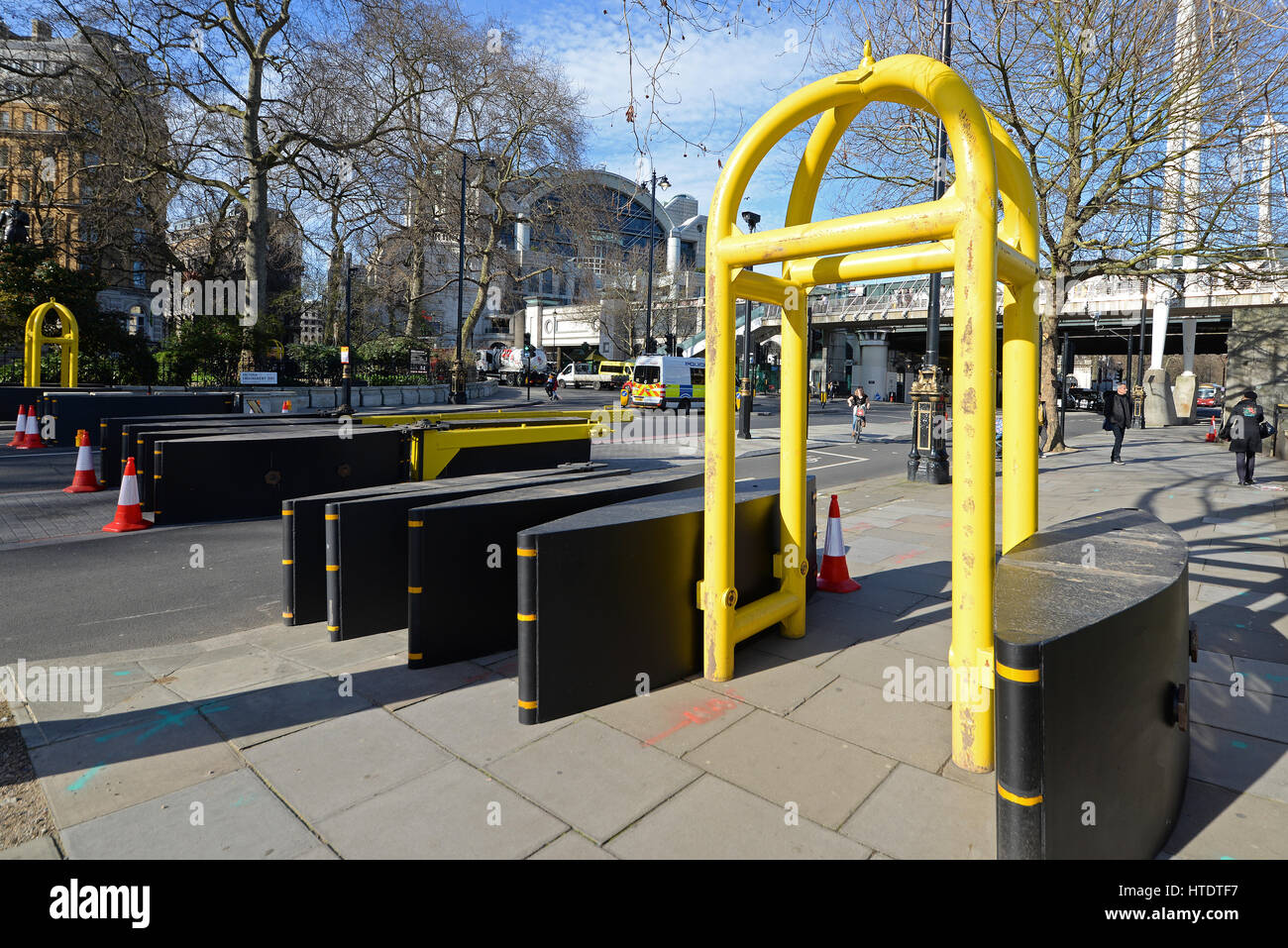
Police Station Security Measures System
Toronto: University of Toronto Press. McLeod, Ross (2004). Toronto: Boheme Press. Button, Mark (2007).
Aldershot: Ashgate.com. Retrieved 2010-03-25. (PDF). Archived from (PDF) on 2009-03-27. Retrieved 2016-03-25.
CS1 maint: Archived copy as title. Robertson, Brian (2008-05-28). Canadian Security. CLB MEDIA INC. Retrieved 2008-06-05. Archived from on 2007-12-21.
Retrieved 2007-12-06. Archived from on 2009-02-13. Retrieved 2010-03-25. (PDF).
Archived from (PDF) on 2008-02-28. Retrieved 2007-10-11. CS1 maint: Archived copy as title. ^. Government of Ontario, Canada.
Ministry of Community Safety and Correctional Services. Government of Ontario. Retrieved 2007-09-03. Government of Ontario, Canada. Ministry of Community Safety and Correctional Services.
Government of Ontario. Retrieved 2007-09-03. Government of Alberta, Canada. Ministry of Community Safety and Correctional Services Alberta. Government of Canada.
Retrieved 2012-09-03. Security Guards in Canada. Government of British Columbia.
Retrieved 2009-03-12. British Columbia Ministry of Public Safety and Solicitor General. Archived from on 2009-03-20. Retrieved 2009-03-12. Retrieved 2010-03-25.
British Columbia Ministry of Public Safety and Solicitor General. Retrieved 2009-06-29.
Retrieved 2010-03-25. (PDF). Retrieved 7 September 2014. Archived from on 2010-02-26. Retrieved 2010-03-25. Retrieved 2007-12-14. Www.ringblad.no.
(in Norwegian). Retrieved 2010-03-25. Retrieved 2010-03-25. (PDF). Kementerian Dalam Negeri.
Retrieved 2014-12-23. South African Government. Archived from on 2011-06-04. Retrieved 2009-06-22. Goldstein, Amy (2010-08-23). The San Francisco Chronicle.
Data Security Measures
Archived from on 2010-03-30. Retrieved 2010-03-25. Www.amrelitech.com. Pastor, James F. The Privatization of Police In America: An Analysis and Case Study.
Jefferson, NC: McFarland. Archived from on 2011-01-23.
Retrieved 2010-01-21. CS1 maint: Archived copy as title. (PDF). Archived from on 2010-03-18. Retrieved 2010-03-25.
Retrieved 2010-03-25. South Carolina Code of Laws, Title 40, Chapter 18. South Carolina Code of Laws, Title 56, Chapter 5 Section 170. South Carolina, Attorney General's Opinion: Aug 01,1978 Apr 30, 1987 May 23, 1995 Aug 30, 2001 Oct 15, 2004 and State V. Brant (S.C.1982) 278 S.C. 188,293 SE2d 703.
Police Station Security
Retrieved 2010-03-25. Retrieved 2010-03-25. Retrieved 2010-03-25. Retrieved 2010-03-25. Archived from on 2010-03-06. Retrieved 2010-03-25. Texas Legislature.
(PDF). Texas Private Security Bureau. Texas Legislature.
Texas Legislature. Texas Legislature. Texas Legislature.
Texas Legislature. (PDF). Texas Private Security Bureau. (PDF). Texas Private Security Bureau. (PDF).
Texas Private Security Bureau. National Advisory Commission on Criminal Justice Standards and Goals (NAC-CJSG) (1976). 'Private Security: Report of the Task Force on Private Security'. Washington, DC: U.S.
Department of Justice, Law Enforcement Assistance Administration. Archived from on 2008-12-19. Retrieved 2010-03-25.
Retrieved 2010-03-25. Archived from on 2009-01-09. Retrieved 2010-03-25. UFCW Canada - Canada’s Private Sector Union.External links.
Related Posts
- Kutu Ma Kutu Lyrics
- Men Of War Dcg
- Need For Speed Most Wanted Download Pc Ita
- Narsillion: Leithian Another Story Download
- Dj Lucky 2018 Mp3
- Train Simulator Games Download
- How To Open Dvd Drive On Acer Laptop
- Asio4all Ableton No Sound
- Sims 4 Knife Mod
- Download X Men Origins Wolverine
- Windows Server 2003 Download
- Picture It For Windows 10
- Sims 2 Nude Mods
- Aps 101 Manual Pdf
- Repack By Team V.r.
- Suspense Digest January 2019
- Victoria Tutorial Hard Disk Ddd Enable
- Alawar Heroes Of Hellas
- Cheat Codes For Jurassic World
- Tisca Chopra Whatsapp Number
- Janam Janam Ke Saath Mp3 Song Dilwale
- What Is Avast Nitro
- Activate Windows On My Screen
- Advanced Proxy For Ipcop